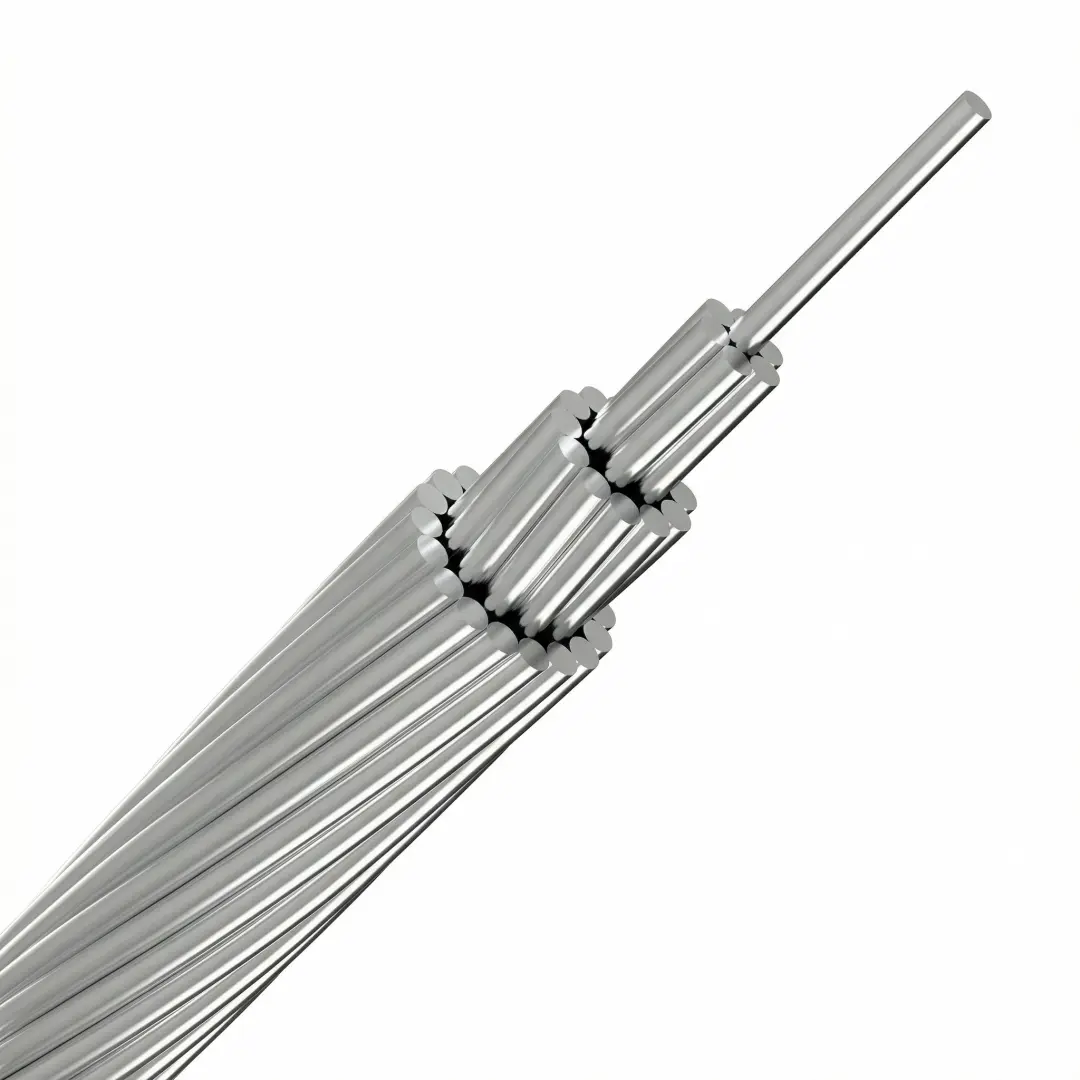
All Aluminum Alloy Conductor
AAAC is a concentric-lay stranded bare overhead conductor manufactured from high-strength aluminum alloy wires. It is designed for overhead transmission and distribution applications requiring higher mechanical strength than AAC, better corrosion resistance than ACSR in many environments, and improved sag performance.
AAAC (All Aluminum Alloy Conductor) is developed for power transmission and distribution lines where a homogeneous conductor with balanced electrical and mechanical performance is required. Compared with AAC, AAAC provides higher mechanical strength and better sag characteristics. Compared with ACSR, it offers better corrosion resistance in many coastal, humid, and polluted environments because it contains no steel core.
- Primary and secondary overhead transmission and distribution lines
- Utility overhead distribution networks requiring improved strength-to-weight ratio
- Medium-span and selected longer-span overhead lines
- Coastal, humid, polluted, and other corrosive environments
- Projects requiring a lighter homogeneous conductor with stable conductivity and good sag performance
- IEC 61089
- GB/T 1179
- ASTM B399
- BS 3242
- DIN 48201
- AS 1531
- NFC 34-125
Other recognized market- or project-specific standards can be discussed after technical confirmation.
AAAC is a concentric-lay stranded bare conductor made from high-strength aluminum alloy wires. Depending on the standard and grade, it may be described as 6201-T81 aluminum alloy conductor or aluminum alloy 1120 conductor. The construction is similar in appearance to AAC, but it is engineered to deliver higher tensile performance, improved sag behavior, and stronger abrasion resistance than 1350 aluminum conductors.
- Higher mechanical strength than AAC
- Better corrosion resistance than ACSR in many environments
- Improved sag characteristics and strength-to-weight ratio
- Homogeneous conductor design without steel core
- Suitable for overhead lines requiring balanced electrical and mechanical performance
- Available according to international and project-based standards
Choose AAAC when the project requires a stronger alternative to AAC, especially on overhead lines where lower sag, better tensile performance, and improved corrosion resistance are important. It is particularly suitable for coastal regions, humid environments, polluted areas, and transmission or distribution lines where a homogeneous conductor without steel reinforcement is preferred.
- AAC is more suitable for lighter-duty urban and local distribution where mechanical load is lower.
- AAAC provides higher tensile strength and better sag performance than AAC.
- ACSR offers very high tensile strength, but AAAC may offer better corrosion resistance in many environments because it contains no steel core.
- AAAC is often selected when the project needs a balance between conductivity, mechanical strength, and environmental durability.
Use the following condensed table on the product page. The full standard-based tables appear in the PDF datasheet.
| Nominal Area (mm²) |
Stranding | Overall Diameter (mm) |
Unit Weight (kg/km) |
Rated Strength | DC Resistance at 20°C (Ω/km) |
Standard |
| 35 | 7/2.52 | 7.56 | 95 | 10.81 | 0.9651 | GB/T 1179 |
| 100 | 19/2.79 | 14.0 | 319.3 | 37.76 | 0.2877 | IEC 61089 |
| 250 | 37/3.22 | 22.54 | 835 | 86.64 kgf | 0.1093 | BS 3242 |
| 300 | 61/2.50 | 22.5 | 827 | 83.63 | 0.1110 | DIN 48201 |
| 408.7 | 37/3.75 | 26.25 | 1127 | 115.0 | 0.0819 | AS 1531 |
| 570.22 | 61/3.45 | 31.05 | 1574 | 18360 kg | 0.0583 | NFC 34-125 |
Q: What is AAAC conductor used for?
A: AAAC is used for overhead transmission and distribution lines where better mechanical strength than AAC and better corrosion resistance than ACSR are required.
Q: What is the difference between AAAC and AAC?
A: AAAC uses high-strength aluminum alloy wires, so it provides higher tensile strength and better sag characteristics than AAC.
Q: What is the difference between AAAC and ACSR?
A: AAAC is a homogeneous alloy conductor without steel core. In many environments it offers better corrosion resistance, while ACSR is selected when very high tensile strength is the main priority.
Q: Is AAAC suitable for coastal areas?
A: Yes. AAAC is widely used in coastal and corrosive environments because it offers good natural corrosion resistance.
Q: Which standards are commonly used for AAAC?
A: Common production routes include IEC 61089, ASTM B399, GB/T 1179, BS 3242, DIN 48201, AS 1531, and NFC 34-125.
Q: Can Farwalk Cable provide datasheets and custom specifications?
A: Yes. Standard-based production, technical confirmation, and custom specification support are available on request.
Global Engineering & Project Support
Our technical team is ready to discuss customized cable solutions, compliance documentation, and optimized supply chain strategies for your international projects.
REQUEST A QUOTE